Getting Children Ready to Start School

You’ve got your child’s primary school place sorted, all the forms are filled, and now it’s time to get your child ready. When getting your child ready to start ‘big school’, academic preparation is less important than developing social skills and emotional competence – your child will have years of academic lessons ahead of them. If you follow a routine and help make your child feel more comfortable about starting school, when the time comes for them to put on their uniform, the process will be easier for everyone. There are a few tips and tricks you can follow to help get your children ready for school.


Encourage Independence

When children start in Reception, they are expected to know the basics of looking after themselves. Before the term begins, encourage your child to dress themselves, fastening zips and buttons, and practicing taking their coats off and on. Also, start to teach your children how to correctly eat with a knife, fork and spoon, and enforce table manners and the etiquette of eating with others as they will be doing during lunchtime at school.

Ensuring your child can go to the toilet themselves is another important skill for your child to have. Teach them about the toilets they should use, and practicalities such as locking toilet doors. All infants are bound to have accidents during their first months at school but help them feel more confident about using the bathroom on their own, creating one less thing for them to feel nervous about.


Develop Speaking and Listening Skills

As much as concentration skills are taught and developed over the first years of education, it is important to get your children used to speaking and listening and having those vital communication skills. Encourage discussions at home, perhaps over dinner, letting everyone speak their turn without being interrupted. Practice such as this will help get your child ready to actively listen to their teacher and their peers, a transferable skill that is vital throughout their lives.


Enable Socialising Spaces

If your child has been to pre-school or nursery, they will already have begun to develop their socialising skills, having previously formed friendships in their early years. Continue encouraging them to do so, by visiting playgroups and other social activities. If your child hasn’t been to a nursery, don’t worry as there are lots of playgroups around that can get your child used to being with people of their own age.

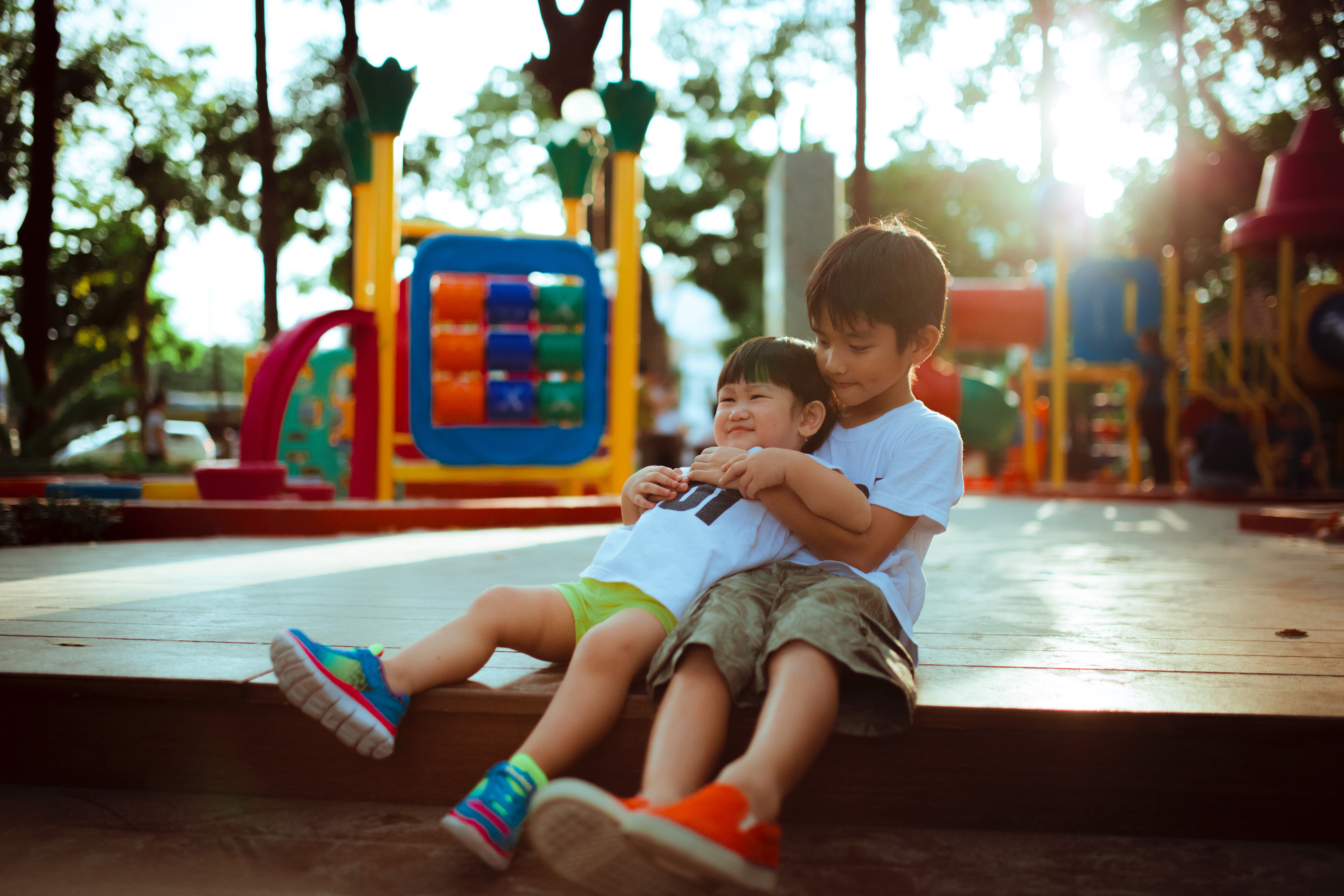
Along with this, it is important to encourage your child to play nicely, by sharing and listening to each other. If your child has siblings encourage sharing between them, helping them get prepared for the sharing and group environment of primary school.


Teach Them to Recognise their Name

One of the first things children are taught in school is to read and write their own name. Don’t worry if your child can’t write it before they start school, but it is helpful if they have an understanding of the word and can spell it out loud – it might prevent jumpers getting lost in a locker room!


Stay Positive

Help remove your child’s fear of the unknown by talking about school in a positive way. Children may soon pick up on your attitude and become exited and possibly less apprehensive about starting something new. With this, encourage positive behaviour by rewarding your child when they do something they should do in school, such as taking turns or following rules. Through positive reinforcement, children can pick up good habits that will put them on the right path for succeeding in school.


Establish a Routine

Start your school day routines a couple of weeks before school starts to get your children ready for the transition. Start getting your child used to a sleeping pattern and getting up and dressed early in the morning. Establishing a routine prior to term starting will get everyone used to the timings of the day, whilst also ensuring your child will be getting enough sleep so they can be at their most productive during school hours.

It is also important to help your children understand that school will be something they go to every week, Monday – Friday. All schools start their new students on different timetables, some schools run half-days for the first term, while others have children with summer birthdays starting a few weeks later. Whatever your school does, getting your child used to a routine and being away from you for the day will make starting at school a whole lot easier.

Starting school is a daunting and nerve-wracking time for both children (and parents!), but if you help get your child ready to take this milestone next step, they are sure to fall into a school routine happily.
For more information on getting your children ready to start school, feel free to call us on 0114 258 2283 or email manager@scallywags-nursery.com .

The Importance of Reading to Your Children

Reading to your children is very beneficial, even from an early age. From concentration to imagination, reading aloud from a variety of books can help spark an interest in the written word, as well as helping your child develop transferable skills they will use throughout their life. Adding reading into your schedule, perhaps as a bedtime story, can help give your child the best start in their academic life, as well as stimulating an interest in their ever-widening worlds. Having some one-on-one time with your child and reading them a range of poetry and prose will benefit them in numerous ways.


Cognitive Development

Frequent reading to your children will help to kick start their cognitive development – their ability to think and understand. Reading can help develop areas such as information processing, intelligence and memory, just to name a few. It is never too soon to start reading to your children, just start with books with lots of pictures and ensure to point at the words you’re saying, making sure your child understands what is being said. By beginning to expand their vocabulary, bedtime stories can help to gradually develop your child’s knowledge of the world, growing it little by little every day.


Language Skills

Reading aloud to your children can help their language acquisition and literary skills. By speaking slowly and clearly, you can help your child begin to establish the meanings of language and differentiate between the words you are saying. Many children soon find a favourite story, but it is important to switch between the stories you are telling to continue to widen your child’s understanding of language.

By helping to increase your child’s language skills, you are giving them the best preparation for starting school. You can help jumpstart their reading success and put them in the best position at the start, and throughout, their academic career.


Concentration

Young children and toddlers often struggle sitting still and concentrating. By introducing stories into your routine, it will become a time for your child to relax and focus throughout the whole duration of a book. Toddlers may squirm and get distracted at first, but you will soon notice a change in behaviour as they settle and begin to actively listen. The ability to concentrate will fare your children well when they start school as it is a skill that is best to be developed early on.


Imagination

Another important skill reading will develop is imagination and your child’s creativity. Widening your child’s world through language allows them to explore place, people, time and events, letting imaginations run wild. As much as concentration is an important skill, creativity will benefit them greatly in later life, as well as increasing their enjoyment of fiction.


Love of Reading

From an early age, a lifelong love of reading can be established. Your children will look forward to hearing you tell stories, taking them to lands near and far away, off on adventures and saving the day. Starting this interest young will encourage your children to read independently when they can, developing their own language skills that will benefit them throughout their academic, work and general lives.

For more information on the importance of reading to your children, or if you have any queries, don’t hesitate to contact us on 0114 258 2283 or visit our Facebook page.

The Benefits of Messy Play

Messy play can be something that we avoid doing at home with our children for fear of the mess, however Messy Play is extremely beneficial for your child. Today, we are going to be looking at the benefits of this activity and how good it is for your child’s development.

Curiosity/Imagination
Messy play consists of a variety of objects, such as paint, glue, glitter and sand amongst many others.
Letting a child play around with messy objects has the advantage of letting your child run wild with their imagination. Unlike physical toys, which are mainly restricted to a single function, there are no limits to messy play. Your child can experiment with raw materials and go crazy with whatever ideas they can come up with.
Don’t be afraid about the clean up afterwards, let your child have their fun.


Physical Development
Another benefit of messy play how it can improve your child’s motor skills, especially hand eye coordination.
Activities that promote physical development include stacking or pouring raw materials, as well as feeling the texture of certain objects. These activities help your child to not only understand how things feel and work, but to also learn how to control their movements and develop their motor skills.


Communication and Social Development
Messy play is helpful in encouraging interaction and sharing with other children and helps them learn how to build up new relationships. Socialising with other children during messy play can help your child understand how to take turns and share, as well as learning about personal boundaries and respecting other children’s ideas.
You can take part as well. When your child is engaging in messy play, you could ask them questions about what they are doing; What colour is this object? How does this feel? With these types of questions, you can encourage your child’s thinking skills and help them learn more about the world.


Future Intellectual Skills
In addition to the previous advantages, messy play helps a child to develop new skills that they may use in the distant future.
This is where a child can increase their problem-solving skills, such as classifying how certain objects work, writing out letters in clay/plasticine, and the cause and effect of something (dropping a ball and watching as it bounces back up).
Not only is this interesting to your child, it helps them to improve on their cognitive skills, from thinking about how an object works to communicating about what they are doing.

Whilst the activity can be, literally, messy, it can benefit your child greatly. So next time you see your child playing with a messy material, let them explore and maybe join in.

Healthy Eating for Children

When it comes to introducing healthy food to your children, there’s always a worry that they might not gravitate to trying healthy meals.

As a nation, we are not always eating well balanced diets and, as a result, are becoming more overweight. A well-balanced diet, consisting of the food below, can help us to become healthier eaters and recognise what we should consider feeding our children.

Below, we’re looking into the types of healthy food that you can offer your child, as well as what specific products you should consider during meal times.

Starchy Food

Starchy food consists of bread, rice, pasta, and potatoes amongst many others. These are crucial for children to eat at a young age, as they contain minerals and vitamins that are essential for your child’s growth.

If you want to introduce your child to eating bread, try to offer them a range of wholegrain breads like Tortilla and Pitta. You can also introduce pasta, noodles and rice too and see how they react.

Snack noodles are high in fat, so be careful not to feed them to your child.

Nuts are an excellent source of fibre but avoid feeding them to your child until they are five years old and above as they could be a choking hazard.

Fruit and Vegetables

Fruit and Veg are excellent sources of nourishment and we encourage you to introduce them to your child at any age.

A good starting point for making sure that your child eats fruit and vegetables is to give them a variety of five portions every day. These can range between fresh, canned, tinned, dried or frozen.

A child portion is half of an adult portion, but this can vary depending on the age and size of your child. Once your child is between the ages of 3-5, you can gradually increase their fruit and veg portions to an adult sized one.

Protein Food

Much like starchy food, protein is full of vitamins and minerals that are crucial to areas of the human body, such as brain development and stronger bones. These foods include beans, fish, eggs and lentils, as well as various others.

We recommend that your child should eat two portions of fish a week, with one being an oily fish meal e.g. salmon or trout. Meat products, such as chicken and beef are excellent sources of protein, with chicken being the least fatty of the two. You can also add pork and lamb to your child’s diet as these are rich in protein.

Don’t feel limited to just meat when it comes to incorporating protein. Eggs are a great alternative as they are made up of protein and iron, along with beans and lentils which are low in fat and high in protein.

Milk and Dairy Food

Milk and Dairy products provide children with a good source of calcium and protein which is important for bone development, as well as the nerves and muscles.

Wholemilk can be given to children once they are a year old but can be introduced into foods at around 9 months. If by then, they are growing well and are eating a variety of other foods, you can then introduce them to semi-skimmed milk.

Other dairy snacks you could offer your child include natural yoghurt (Processed yoghurt is full of sugar and colourings), and cheese and fruit sticks. Make sure that your child is fed three servings of calcium food every day, as children under five require more calcium-based food to help them grow.

Other Strategies You Can Try

Eating your meals together as a family: Not only does this encourage more time between you and your children, but it gives you a chance to introduce new foods and not always eat unhealthy snacks.

More Involvement for the children: Feel free to give your children the chance to choose a balanced meal. Let them join you on a shopping trip and pick out what ingredients are needed for the meal. With more involvement, your child will be able to make decisions about what food they want to eat and have healthier options in the future. You could also try getting them involved in the cooking and preparation of meals.

Stock up on Healthy Meals: If you want your children to keep eating healthy foods, you should continue to weave fruits and vegetables into the meal routine. You can also limit fattening foods and drinks, giving your child a choice of healthy snacks, but don’t ban fast food permanently. An occasional treat won’t hurt.

Socialising – When and How to make friends

Socialising with other children is a key stage in your toddler’s life. It’s an exciting way of building up new friendships, helps to develop your child’s communication skills, and understand more about how the world works.

We’ve put together a guide on when and how socialising your child can be beneficial, and how they can make new friends in the process.

When?

From birth we require contact with others, initially it is the love and nurture that we need from our parents and family. As a baby we receive physical contact from our mothers, such as being fed milk, skin-to-skin contact and cuddling with their parents. Scientists believe that babies can understand social cues before being born i.e. recognising their mother’s voice whilst being in the womb and being able to understand infant-directed speech later after birth, as it is this speech that they usually prefer. Our environment and upbringing does impact on how sociable we grow up to be, and how we relate to others.

1 Year Old

The first year of a child’s life is full of milestones and developments. During their first year, a baby will start developing their physical skills. They show this by grabbing nearby objects and learning how to walk. You can help them by creating a routine and safe areas around the house, as well as assisting with sitting up properly. Be sure to let them develop their skills at their own pace, as every child develops at different ages so there is no need to rush natural development.

As your child reaches toddler age around 2- 3 years old, your child will start showing signs that it’s time to start socialising them outside of family circles.

2 Years Old

At this age, majority of infants will be steady on their feet and be able to walk around. They will also start reaching out to play with other children, but not sharing any toys with them. We recommend introducing them to other children if that is the case. You could also try signing up for a class or a parent-focused meet up group in your local area. Let your child take their time in wanting to play with others.

How?

Once your child is ready to socialise, attending a local nursery or toddler group to play with others offers a good opportunity. Nursery activities are a crucial aspect in helping a child to develop their communication and learning skills. They also help to build up the trust between children and other adults and allow the former to learn about new social settings.

At Scallywags Nursery, we encourage children to take part in various activities, so that they may learn about the world around them. We run music sessions with a teacher, which helps toddlers acquire skills in rhythm and pitch through the use of instruments, singing and listening. By working together with other children, your child will be involved in an environment that allows them to make new friends and develop new skills along the way.

Group activities also help a child with their socialisation skills.

Along with our music sessions, we have other group focused activities that encourage socialising. One of these is the sensory room, where the children use their bodily senses (Sight, smell and touch) to explore the room. It is an activity that allows them to become familiar with being in a different environment, as well as promoting socialisation through the use of problem solving together as a team.

You can also try to encourage social development yourself, by talking to your child through baby talk and using eye contact, teaching them about being empathetic to others around them, and gently encouraging them to try new experiences.

Yoga sessions for younger children is another group activity that we organise at Scallywags. This consists of toddlers being placed in ability groups, based on how skilled they are in the activity. This exercise class encourages teamwork amongst the toddlers, allowing them to improve on their mobility skills and build up friendships with other children by working and communicating together.

Telling and reading stories helps to develop a child’s understanding on how to relate/react to another child’s feelings. Many children’s stories speak about our emotions, such as feeling happy, sad, excited etc, and with this concept, your child will have more knowledge on other children’s emotions. Empathy for others is demonstrated and learned by how you react and relate to your child and how you as a parent relate to those around you.  For example, if a child falls down and hurts themselves, explain to your child what has happened and how they can help that toddler to feel better. As a parent responding to the situation in a loving and practical way, we help your toddler understand how to respond.

They say that children learn what they live and therefore as a parent the main influence on a child’s social development is you and the environments they experience. Babies and toddlers are programmed to mimic behaviours. Communication and nature with your child are key to developing a confident and sociable individual.